“Is it safe to drive in Albania?” This question appears in thousands of travel forums every year. The short answer: yes, absolutely—but it helps to know what to expect before you get behind the wheel.
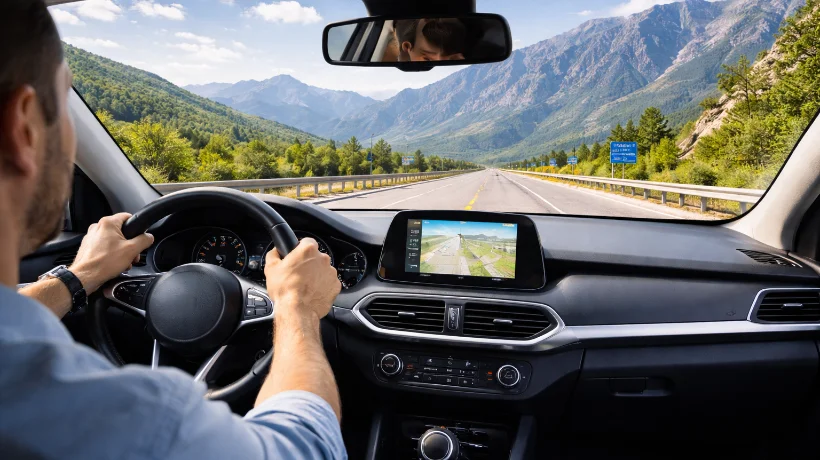
Albania has invested heavily in road infrastructure over the past decade. Modern highways connect major cities, coastal routes are well-maintained, and even mountain roads to remote villages are improving yearly. However, driving here does feel different from Western Europe or North America.
This complete guide covers everything international tourists need to know about driving in Albania: real road conditions, practical traffic rules, safety tips, local driving customs, and how to navigate confidently whether you’re on coastal highways or mountain passes.
Road Conditions: The Real Picture
Let’s be honest about what you’ll encounter on Albanian roads in 2026.
Main highways and national roads:
Albania’s primary highway network is genuinely excellent. The A1 highway connecting Tirana to Kosovo, the SH2 coastal highway to Durrës, and the SH8 Albanian Riviera route are all modern, well-paved, multi-lane roads comparable to highways anywhere in Europe.
These routes feature:
- Smooth asphalt surfaces
- Clear lane markings
- Modern signage (often in Albanian and English)
- Safety barriers
- Good lighting in populated areas
If your Albanian road trip sticks mostly to main routes between cities and along the coast, you’ll find driving straightforward and comfortable in any vehicle.
Secondary roads and rural routes:
Once you venture off main highways—toward mountain villages, remote beaches, or interior regions—road quality varies more. You might encounter:
- Narrower two-lane roads
- Occasional potholes (though fewer each year)
- Sections without center line markings
- Sharp curves in mountainous areas
- Roads shared with livestock or agricultural vehicles
These aren’t dangerous, but they require more attention and slower speeds. Most tourists handle them fine with a bit of caution and patience.
Mountain roads:
Roads to destinations like Theth, Valbonë, or other Albanian Alps locations can be challenging. Expect:
- Steep grades and switchbacks
- Narrow passages (sometimes only one vehicle width)
- Gravel or partially unpaved sections
- Few guardrails in remote areas
- Weather-dependent conditions
These routes are absolutely drivable—thousands of tourists complete them every summer—but you should have mountain driving experience and ideally rent an SUV with good ground clearance.
The bottom line: Albanian roads are far better than their reputation. Main routes are excellent, secondary roads are perfectly manageable, and even mountain roads are accessible if you choose the right vehicle and drive carefully.
Which Side of the Road? Basic Traffic Rules
Albania drives on the RIGHT side of the road, the same as continental Europe and the USA.
If you’re from the UK, Ireland, Australia, or another left-hand-drive country, you’ll need to adjust—but most travelers adapt within the first hour or two, especially since road markings and traffic flow make it intuitive.
Other fundamental rules:
- Speed limits: 40 km/h in residential areas, 80-90 km/h on open roads, 110 km/h on highways (detailed section below).
- Seatbelts: Required for driver and front passenger; strongly recommended for all occupants.
- Mobile phones: Illegal to use while driving unless you have hands-free/Bluetooth.
- Alcohol limit: 0.1g per liter of blood (very low—essentially zero tolerance).
- Headlights: Dipped headlights required at night and in poor visibility (some recommend daytime use on mountain roads too).
Most rules align with standard European regulations. If you’ve driven anywhere in the EU, you’ll find Albania familiar.
Understanding Albanian Speed Limits (And Enforcement)
Speed limits in Albania follow a logical pattern:
- 40 km/h (25 mph): Residential streets, villages, school zones.
- 50 km/h (30 mph): Urban areas and city streets.
- 80 km/h (50 mph): Rural two-lane roads outside villages.
- 90 km/h (55 mph): Better-quality rural highways.
- 110 km/h (68 mph): National highways and motorways.
Enforcement:
Albanian traffic police use radar to monitor speed, especially:
- Entering and exiting cities and towns.
- Known accident-prone areas.
- Holiday periods when traffic is heavier.
Fines for speeding exist and can be significant (€50-€100+ depending on how much over the limit you’re caught). However, enforcement is less intensive than in countries like Germany or Switzerland.
Practical advice:
- Slow down when entering any village or town—limits drop to 40 km/h.
- Watch for posted speed limit signs (they’re common and clear).
- Don’t treat highways as autobahns; 110 km/h is the absolute maximum.
- Mountain roads often have advisory speed warnings for curves—respect them.
Most tourists never have issues with speed enforcement because they naturally drive cautiously in an unfamiliar country.
Local Driving Culture: What to Expect
This is where many tourists feel uncertainty. Albanian driving culture includes some local customs that differ from stricter rule-following cultures:
Overtaking:
Albanian drivers overtake more frequently and on tighter margins than you might be used to. On two-lane roads, expect:
- Cars passing even on curves or hills (though this is technically illegal).
- Aggressive use of the left lane to signal overtaking intent.
- Flashing headlights to warn oncoming traffic of overtaking.
Your response: Stay right, maintain steady speed, and don’t be surprised. If someone overtakes you on a section you’d consider too risky—that’s common here.
Horn use:
Horns are used liberally for communication:
- A quick beep means “I’m here” (when passing parked cars or blind corners).
- Two beeps might mean “thanks” or “you go first.”
- Extended honking usually signals frustration.
Don’t interpret horn use as aggressive—it’s normal communication.
Roundabouts:
Albania has many roundabouts, especially in and around Tirana. Officially, traffic already in the roundabout has right of way. In practice:
- Be cautious entering—not everyone yields properly.
- Use your turn signal when exiting.
- Watch for motorcycles and scooters weaving through.
Parking:
Parking rules are… flexible. You’ll see cars parked on sidewalks, in creative angles, and in spaces you’d think impossible. As a tourist:
- Use marked parking areas when available.
- In cities, look for paid parking zones (small fee, usually pay at meter or to attendant).
- Don’t block traffic or park in obviously prohibited zones.
Livestock and rural driving:
In rural areas and villages, be prepared for:
- Sheep, goats, or cows crossing roads.
- Tractors moving slowly or unexpectedly.
- Pedestrians walking along roads without sidewalks.
Slow down in rural areas and expect the unexpected.
The bottom line: Albanian driving culture is less rigid than Northern Europe but more orderly than stereotypes suggest. Drive defensively, stay aware, and you’ll navigate it all safely.
Navigation and GPS in Albania
GPS and mapping apps:
Google Maps works excellently in Albania for:
- Main highways and city streets.
- Most coastal and rural roads.
- Finding businesses, hotels, and attractions.
For remote mountain areas, download offline maps before you leave WiFi coverage:
- Google Maps offline: Save the Albania map area.
- Maps.me: Excellent free app with detailed offline maps, widely used by overlanders.
Road signs and language:
Albanian road signs follow international pictogram standards (most are symbols, not words), so even without knowing Albanian, you’ll recognize:
- Stop signs
- Speed limits
- Directional arrows
- Hazard warnings
Directional signs to major cities are often in both Albanian and English. Smaller town names may only be in Albanian, but GPS handles this.
Key Albanian road vocabulary (just in case):
- Autostradë: Highway/motorway
- Shesh: Square
- Rruga: Street/road
- Qendër: Center
- Plazh: Beach
Most tourists never need to read Albanian signs—GPS and pictograms cover 99% of needs.
Parking in Albanian Cities
Parking varies significantly depending on where you are:
Tirana:
The capital has paid parking zones in the center:
- Blue zones require payment at meters (usually €1-2 per hour).
- Parking attendants in vests often collect payment.
- Underground parking garages exist in shopping centers.
- Finding street parking in the center during business hours is difficult.
Pro tip: Park at your hotel (most offer parking) and walk or taxi into the center.
Other cities:
Durres, Shkodër, Vlorë, and similar cities have easier parking:
- Free street parking outside the immediate center.
- Marked blue zones in central areas (small fees).
- Usually easier to find spaces than in Tirana.
Tourist destinations:
- Beach towns: Parking can be scarce in peak summer (July-August). Arrive early or park outside town and walk.
- Mountain villages: Usually informal parking near main square or guesthouse.
- Historical sites: Most have dedicated parking areas, sometimes with small fees (€1-2).
Always:
- Lock your car and don’t leave visible valuables inside.
- Take a photo of where you parked if in a large lot.
- Check for “no parking” signs (usually clear pictograms).
Fuel Stations and Fuel Costs
Finding petrol:
Fuel stations are common along main highways and in all cities and towns. However:
- In remote mountain areas, stations are scarce.
- Always fill up before heading into the Albanian Alps or very rural areas.
Major brands include Kastrati, Tamoil, and other European chains. Most stations are modern and full-service (attendant fills your tank).
Fuel types and costs (2026 approximate prices):
- Benzinë (Petrol/Gasoline): €1.30-1.50 per liter
- Naftë/Dizel (Diesel): €1.20-1.40 per liter
These prices are comparable to most Balkan countries and lower than Western Europe.
Payment:
Most fuel stations accept:
- Cash (euros widely accepted along with Albanian lek)
- Credit/debit cards at larger stations
Fill your tank before long drives—even though fuel isn’t expensive, running out in a remote area would be very inconvenient.
Safety Tips for Tourists Driving in Albania
Driving in Albania is safe when you follow practical guidelines:
1. Drive defensively:
Expect other drivers to make unexpected moves. Leave extra following distance, check mirrors frequently, and don’t assume others will follow rules you’re used to.
2. Slow down in villages:
Every village is a 40 km/h zone, and children, animals, and pedestrians may be on the road.
3. Watch for potholes and debris:
While most roads are good, occasional potholes or fallen rocks (especially after rain in mountains) require attention.
4. Use headlights proactively:
Dipped headlights make you more visible, especially on mountain roads or during dusk.
5. Plan driving time conservatively:
If GPS says 3 hours, budget 4. Roads take longer than you expect in mountainous areas.
6. Avoid night driving in mountains:
Mountain roads are safer in daylight when you can see conditions clearly.
7. Keep emergency numbers saved:
- Emergency services: 112 (works throughout Albania)
- Your rental company’s 24/7 number for roadside assistance
8. Take breaks:
Long drives on winding roads can be tiring. Stop every 1-2 hours for coffee, bathroom breaks, and to stretch.
Documents and Police Checks
Albanian police conduct routine traffic stops and document checks, especially on main highways and entering cities.
What to have ready:
- Driver’s license (original, not a photo)
- International Driving Permit if your license isn’t from the EU/UK/US
- Passport or ID card
- Vehicle registration (provided by rental company)
- Insurance card (green card, provided by rental company)
During a stop:
- Pull over safely when signaled.
- Stay calm and polite.
- Provide requested documents.
- If you don’t speak Albanian, basic English is usually understood.
Police checks are routine and rarely lead to problems for tourists following basic rules.
Winter Driving and Seasonal Considerations
Summer (June-September):
Peak tourism season means:
- Heaviest traffic on coastal roads and to popular destinations.
- Hot temperatures (30°C+)—ensure your rental has working A/C.
- Best road conditions overall.
Winter (November-March):
Mountain roads can be snow-covered or closed:
- Theth and Valbonë roads often inaccessible.
- Coastal areas remain mild and drivable.
- Winter tires recommended if traveling inland or to mountain areas.
Spring and Autumn (April-May, October-November):
Ideal driving conditions:
- Mild weather
- Less traffic
- Green landscapes in spring, beautiful colors in autumn
- Occasional rain (drive cautiously on wet roads)
Rent the Right Car for Albanian Roads
Your experience driving in Albania depends significantly on having the right vehicle for your planned routes.
At TiRental, we help match tourists with ideal cars:
- City and coastal routes: Economical hatchbacks and sedans work perfectly.
- Mixed terrain with some rural roads: Mid-size sedans or compact SUVs provide extra comfort.
- Mountain adventures to Albanian Alps: SUVs with higher ground clearance are essential.
All vehicles include:
- ✓ Unlimited mileage
- ✓ 24/7 roadside assistance
- ✓ Insurance options for peace of mind
- ✓ Free Tirana Airport pickup
Choose your ideal car for Albanian roads →
Questions about driving conditions for your specific route? Contact us:
📞 +355 69 478 9157 (WhatsApp available)
✉️ [email protected]
Driving in Albania is genuinely safe and enjoyable when you know what to expect. With this guide and the right rental car, you’re ready to explore Albania’s roads confidently.